Djembatan Dua Strengthens Data-Based Healthcare Services through Medical Device Integration Solutions
The Government of the Republic of Indonesia, through the Ministry of Health, is promoting the implementation of Hospital Management Information Systems (HMIS) and Electronic Medical Records (EMR) as part of the national health transformation agenda.
This initiative is stipulated under the Regulation of the Minister of Health of the Republic of Indonesia No. 24 of 2022 on Medical Records, which mandates all Healthcare Facilities (Fasyankes) to implement electronic medical records.
The Ministry of Health has also defined the direction of national health digital transformation through the Decree of the Minister of Health of the Republic of Indonesia No. HK.01.07/MENKES/1559/2022 concerning the Implementation of Electronic-Based Government Systems in the Health Sector and the National Health Digital Transformation Strategy.
Through this policy framework, the SATUSEHAT platform has been designated as the backbone of national health data integration, promoting data standardization, system interoperability, and secure, integrated exchange of healthcare service data among healthcare facilities.
In line with these policies, PT Djembatan Dua, a subsidiary of PT Medela Potentia Tbk, plays an active role in supporting the implementation of Hospital Management Information Systems (HMIS) or Electronic Medical Records, as well as the integration of healthcare service data into the SATUSEHAT platform.
As a provider of professional medical device solutions in Indonesia, PT Djembatan Dua possesses technological capabilities to develop systems and connectivity that enable medical devices to integrate with hospital information systems. These capabilities allow medical devices to support data interoperability as mandated under the national health digital transformation policy.
PT Djembatan Dua introduces a Medical Device Integration (MDI) approach as a strategic solution to support HMIS implementation. Through MDI, medical devices used for patient screening or diagnosis can be directly recorded within the HMIS of healthcare facilities.
“The digitalization and integration of hospital services are part of a long-term strategy to build a high-quality, integrated, and data-driven healthcare system. Integrating medical devices with hospital systems strengthens clinical service quality, data governance, and regulatory compliance, while creating sustainable value for all stakeholders,” said Mr. Edbert Orotodan, President Director of PT Djembatan Dua.
One of the most critical initial processes in the patient care pathway is health condition screening, including blood pressure measurement. At this stage, patients are generally located in registration or triage areas, while healthcare professionals are required to obtain measurement results that are fast, accurate, and properly documented within the system. Speed and accuracy are key factors in maintaining service flow efficiency while ensuring patient safety.
Therefore, blood pressure screening requires medical devices that are not only precise but also capable of integrating with Electronic Medical Record systems, allowing measurement data to be automatically, consistently, and continuously recorded as part of the patient’s medical record.
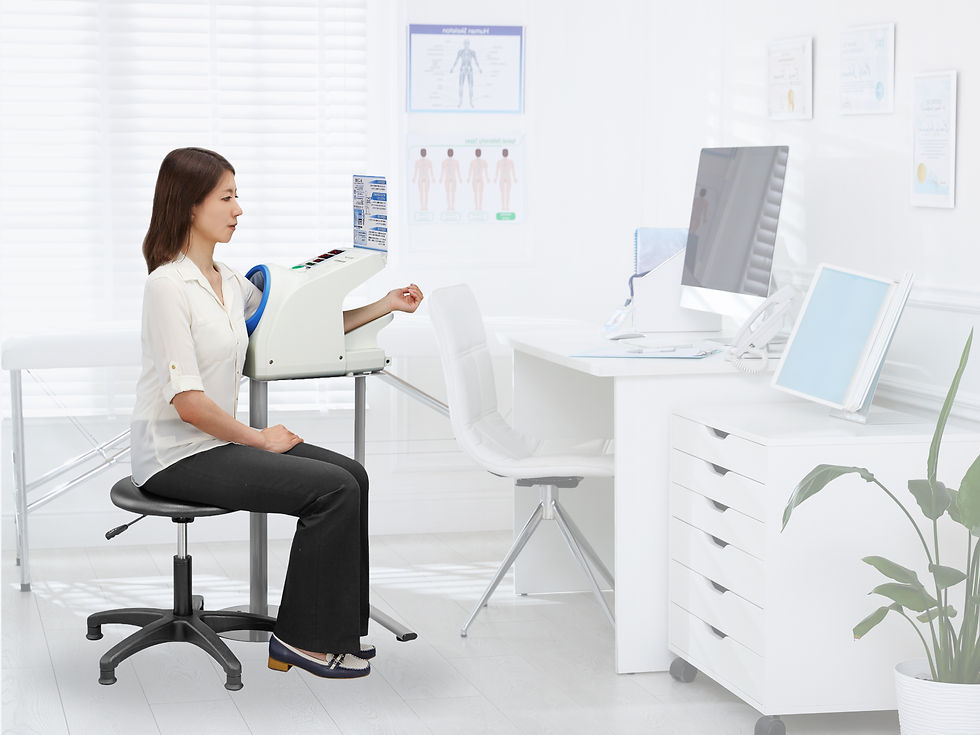
One such implementation is realized through the use of the AND TM-2657P blood pressure monitor, a Japanese-technology medical device that supports HMIS requirements and is ready for integration with hospital systems.
Through the development of MDI systems by PT Djembatan Dua, the AND TM-2657P enables blood pressure measurement results to be automatically recorded into hospital systems. This integration helps healthcare professionals optimize workflows, improve the accuracy of clinical documentation, and accelerate administrative processes without adding manual workload.
From a technological perspective, the AND TM-2657P offers a fast measurement time of approximately 30 seconds, making it well-suited to support outpatient services with high patient volumes. In addition, its Irregular Heart Beat (IHB) or arrhythmia detection feature remains an important component in supporting clinical patient monitoring.
Another advantage of this solution is its ability to generate printed measurement results while simultaneously transmitting data digitally to hospital systems through MDI. With its compact design, the solution can be flexibly deployed across various service areas, including outpatient clinics, ambulatory care units, and health screening facilities.
“The use of the AND TM-2657P blood pressure monitor integrated with hospital systems helps medical professionals obtain more accurate and consistently documented data. This integration plays an important role in supporting hospitals in improving service quality and operational efficiency,” said Mrs. Kansy Widiarty, Director of PT Djembatan Dua.
In terms of impact, this medical device integration delivers tangible benefits for healthcare facilities and patients. Patients receive faster care, healthcare professionals experience reduced workloads—particularly in high-volume services such as hospitals collaborating with BPJS Kesehatan—and the quality and accuracy of clinical data are better maintained. Furthermore, PT Djembatan Dua’s support for the government’s HMIS initiatives aligns with the implementation of the SATUSEHAT Platform in building a standardized, integrated, and sustainable national health data ecosystem.